




Skip to content
Skhillz Academy

Skhillz Learning Center™ | K-12 tutoring and test preparation

The right support starts withunderstanding your child.

Whether your learner needs to rebuild missing skills, strengthen a hard subject, prepare for an exam, or move past what school is offering right now, we start by finding out where they actually are.

They are matched with a qualified instructor, one to one or in a group of no more than six, and work with the same instructor through the nine-week cycle wherever possible, with goals and progress you can follow.

The next cycle starts September 14, in 3 days. 20 seats open across 4 groups.

  • Elementary through high school
  • Live online nationwide
  • Small groups of six or fewer
  • One to one available
  • Placement confirmed before payment

Tell us about your childWhat we tutorExplore programs and pricing

When something needs to change

You know when your child needs something different.

A grade that slipped in October and never came back. Homework that takes three hours and produces twenty minutes of work. Reading that is not moving. A teenager who understands the material and loses the points anyway. Or a learner who is doing well and is ready to be pushed.

You do not have to work out the whole problem before you call. Tell us what you have noticed, what you have already tried, and what you want to change. We will help you find the right next step.

  • The work takes too long

    Your child may understand parts of the assignment and still be missing the underlying skill, the process, the confidence or the organization needed to finish it on their own.

  • The grade is not telling the whole story

    A learner can be capable and still have unfinished learning, uneven performance, test anxiety, or trouble showing what they actually know.

  • The classroom pace is not the right pace

    Some learners need a concept broken down differently. Others need more challenge. Both deserve teaching that answers where they are now.

  • An important test is coming

    Preparation should find which skills and question types are costing the points, rather than handing over another stack of practice questions.

How we begin

We do not start with a package. We start with your learner.

A slipping grade does not always show you the real problem. Sometimes the missing skill started years earlier. Sometimes a learner understands the material perfectly and needs a different explanation, better study habits, more confidence, or harder work than they are being given.

So we begin with a short form and an actual conversation. What we learn from those is used to:

  • Find where your learner is strong and where they are not
  • Understand what you and they want to be different
  • Recommend one to one, or a group matched on need
  • Set specific goals for the nine weeks
  • Match them with an instructor who fits
  • Write down what changes, session by session

You will know what your child is working toward, what happens in the sessions, and what we think should come next.

Tell us about your child

A young learner working with a tutor
A high school student in a small group session
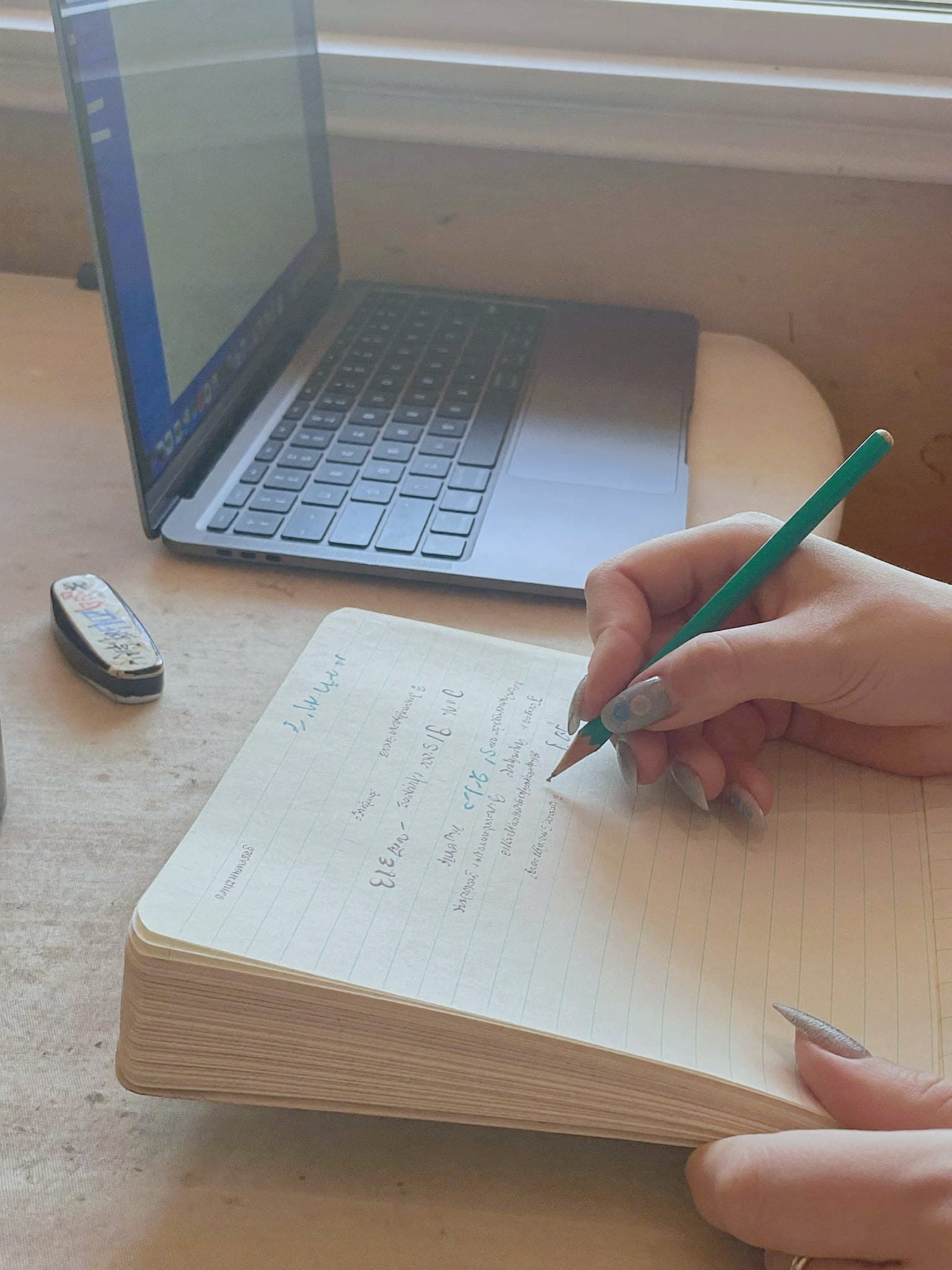
Hands working a problem through in pencil
A tutor beside a student, mid explanation

Two ways to work

A group, or just yours.

The teaching is the same and the tutors are the same. What changes is who else is in the room, and that changes what the hour is good for.

Small group

Six students, maximum

Six is enforced when a seat is booked, not managed afterwards. Learners hear other people work through the same problem, which is most of the reason a group beats a video. Best when a subject needs rebuilding over a term and your learner is not the only one who has hit that wall.

$699 to $1,199 for nine weeks

Eighteen sessions. The price depends on the program, and every one is listed below.

See the group prices

One to one

One tutor, one learner

The whole hour goes where your learner needs it, and the pace is theirs. Best when the gaps are specific, when a group moves too fast or too slowly, when a test is close, or when a learner will not speak up in front of other people.

$1,215 for the nine-week bundle, or $75 a session

18 60-minute sessions, which is 18 contact hours. You can take bundle after bundle for as long as it helps, or pay per session and come as you need to. Test preparation and AP are $1,780, or $110 for a 75-minute session.

Start one to one

Small group instruction compared with one to one instruction
What is being comparedIntentionally matched small groupOne to one
LearnersNo more than sixOne learner
Best forRebuilding skills over time, guided practice, learning alongside others, and families who want the lower costSpecific gaps, individual pacing, a test that is close, awkward scheduling, or a learner who needs the whole hour
PlacementBy compatible instructional need and current skill, not by ageBy individual goals and the subjects needed
InstructorThe same one through the cycle wherever possibleThe same one through the cycle wherever possible
ProgressSession updates and a written end-of-cycle summarySession updates and a written end-of-cycle summary
ScheduleTwo sessions a week through the nine-week cycleA bundle, or approved per-session scheduling

Looking for an educator to lead recurring instruction in your home, rather than tutoring in a subject? That is Skhillz In-Home Teacher Services, where a teacher can carry part or all of the school day. Skhillz employs them, or we search and you employ them.

Nine weeks is a grading period, not a limit.

Every state and district starts and ends its year on its own dates, so we do not try to line up with any one calendar. What almost all of them share is the length: a grading period runs about nine weeks. So a cycle here is long enough to move a grade and short enough that you find out whether it worked. It is not how long you are allowed to stay. Take cycle after cycle for the whole year if that is what helps, or pay per session and come when you need to. Nobody is asked to stop at week nine, and nobody is held past it either.

Experience behind the work

Built on experience helping learners make real progress.

The teaching experience behind Skhillz spans children, teenagers and adults starting from very different places. Individual learners taught in programs led or delivered by our founder have:

  • Up to 30% improvement

    Learners improved regional or standardized assessment performance by as much as 30% after focused instruction and support.

  • Two grade levels of reading growth

    Learners increased reading performance by as much as two grade levels within one school year.

  • SAT scores above 1500

    College-bound students earned SAT scores above 1500 after advanced instruction, preparation and academic support.

  • From failing to passing

    Students in inclusive learning environments moved from failing to passing during the school year while also making meaningful assessment gains.

  • Advancing beyond the expected grade

    Some learners made enough progress to advance a grade level, or to move beyond the level at which they began.

These are individual historical outcomes, not averages, not testimonials, and not a guarantee of what another learner will achieve. Progress depends on where somebody starts, their attendance, their participation, the instructional match and the work between sessions.

Current programs

Academic support for the work in front of them, and the skills beneath it.

We help learners rebuild foundations, work through what is hard right now, prepare for the assessments that matter, and keep the strategies after the sessions end.

  • Elementary Academic Foundations

    For elementary learners who need firmer foundations, clearer explanations, guided practice, or more confidence in the core subjects.

    Format
    Intentionally matched small group
    Schedule
    Two 60-minute sessions each week
    Cycle
    9 weeks
    Total
    18 contact hours

    Tell us about your elementary learner

  • Middle and High School Academic Advancement

    Subject support, skill rebuilding, study strategy and guided practice for learners whose coursework is exposing gaps or creating new ones.

    Format
    Intentionally matched small group
    Schedule
    Two 60-minute sessions each week
    Cycle
    9 weeks
    Total
    18 contact hours

    Tell us about your teenager

  • SAT, PSAT or ACT Preparation

    Preparation that starts from how the learner is actually performing, to find which content, timing, reasoning and question types are costing the points.

    Format
    Small group or one to one
    Schedule
    Two 75-minute sessions each week
    Cycle
    9 weeks
    Total
    22.5 contact hours

    Explore test preparation

  • AP Course Support

    Targeted support for demanding AP coursework, the gaps underneath it, and the exam. Placement depends on which subject specialists are available.

    Format
    Small group or one to one
    Schedule
    Two 75-minute sessions each week
    Cycle
    9 weeks
    Total
    22.5 contact hours

    Request AP support

Which subjects are available in the end depends on instructor capacity and on what the learner needs. We do not promise a subject before an appropriate instructor or group is confirmed.

What it costs

Prices, on the page.

Every small-group package runs nine weeks. Paying in full is its own price, not a discount bolted onto another one, which is why a payment plan never costs more for spreading it out. One-to-one is priced separately, below.

18 contact hours

Elementary Academic Foundations

$699

Pay in full, saves $36

Or 3 payments of $245. Standard tuition $735.

Eighteen hours of small-group academic foundations.

Enroll

18 contact hours

Middle and High School Academic Advancement

$749

Pay in full, saves $40

Or 3 payments of $263. Standard tuition $789.

Eighteen hours of middle and high school academic support.

Enroll

22.5 contact hours

SAT, PSAT or ACT Preparation

$1,099

Pay in full, saves $56

Or 3 payments of $385. Standard tuition $1,155.

Twenty-two and a half hours of SAT, PSAT or ACT preparation.

Enroll

22.5 contact hours

AP Course Support

$1,199

Pay in full, saves $61

Or 3 payments of $420. Standard tuition $1,260.

Twenty-two and a half hours of Advanced Placement course support.

Enroll

One to one

A private tutor costs more than a seat in a group, because the whole hour is your learner’s. The sibling discount does not apply here: there is no hour to share.

One-to-One Academic Tutoring

One tutor, one learner, in any academic subject we cover. Take the eighteen-session bundle or pay per session. Nine weeks is a grading period, not a limit, so you can keep going for as long as it helps.

$1,215

18 sessions, nine weeks

$75

Per session

Enroll

One-to-One Test Preparation and AP

Private SAT, PSAT, ACT and AP preparation. Seventy-five minute sessions, the whole of each one aimed at the sections that are actually costing points.

$1,780

18 sessions, nine weeks

$110

Per session

Enroll

A 10% sibling discount applies to each additional child’s tuition. Fees ride on the first payment rather than being split across every one, so a plan costs the same in total as paying at once, minus the pay-in-full saving. Skhillz does not guarantee a grade, a score, a placement or a school outcome.

The details

Written down.

The questions that otherwise become an email you have to wait a day for.

Fall 2026 nine-week cycle. First Monday September 14, last start October 12. Two sessions each week, after school.

Format
Virtual and live, in a small group or one to one
Group size
Six students maximum, every session, or just your learner
Schedule
Two sessions a week, the same tutor throughout
Length
Nine weeks, eighteen sessions. Renew as long as you want
Ages
Elementary, middle and high school
Siblings
10% off tuition for each additional child
Starting
Any Monday of the cycle, not only the first one
Placement
Confirmed after intake, before a payment plan begins

The calendar

Cycles ahead.

Nine weeks, one after another. You do not have to wait for the start of a school year, and you do not have to catch a single date.

  1. Fall 2026 nine-week cycleStarts September 14, 2026, and you can still begin on any Monday up to October 12, 2026.3 days away20 of 24 seats open

Dates beyond this cycle are set a term at a time. Ask and we will tell you roughly when the next one lands rather than guessing on this page.

How it goes

Four steps. No surprises.

  1. 1

    Tell us what is going on

    The registration form asks what is slipping, what has been tried, and what a good outcome looks like to you.

  2. 2

    We place the learner

    By what they can do now, not by age. If we do not have the right group we say so rather than fitting them into the wrong one.

  3. 3

    You confirm and pay

    Prices are on this page. You pick a plan, and the plan you pick is what you are charged.

  4. 4

    Nine weeks, then a summary

    Goals set at the start, a tutor update you can read after every session, and a written summary at the end.

You should not have to guess

Know what your child is working on, and what comes next.

Through the Skhillz Success Portal, families reach what belongs to their learner and their program: the schedule, attendance, goals, assignments where a program sets them, session updates, progress summaries, messages, agreements and payment records.

Access follows the role. Parents and guardians reach the records they are authorized to reach, and an educator gets only what their assigned learners and responsibilities require.

Learn about the Skhillz Success Portal

Where we are strict

Six students. Not a target.

It is the number the group is built for, it is checked when a seat is booked, and it does not quietly become eight in week four. The same is true of the tutor: cleared before assignment, and removed the day a clearance lapses.

Questions

Questions people actually ask.

What does six students actually mean?

Six, and it is enforced when the seat is booked rather than managed afterwards. It does not quietly become eight in week four because somebody was persuasive. Placement also depends on compatible learning needs: six unrelated openings do not make an appropriate group.

How do you decide whether my child belongs in a group?

We look at what they can do now, what they are working toward, how they participate, their schedule, and the needs of the group they would be joining. We do not place learners together on age or grade alone.

What if you do not have the right group?

We tell you. Depending on instructor availability and what you want, we may suggest one to one, a later group, or somewhere else entirely. We will not put your learner into an unsuitable group to fill a seat.

Is it the same tutor every week?

That is the standard, for the whole nine weeks. Continuity is most of what makes a small group work: by week three your child does not have to explain themselves again. A change can be necessary through illness, a person leaving, an expired clearance or a safety matter, and if it happens we tell you and make the best reassignment available.

What if we start late?

You can begin on any Monday of the cycle. You get the same number of sessions, they just finish later.

Is submitting the form the same as enrolling?

No. It starts the placement conversation. Enrollment is complete only once we have confirmed an appropriate placement and you have completed the agreements and payment. Placement is confirmed before anything is charged, and the system enforces that rather than relying on us to remember.

Do you guarantee a score or a grade?

No, and anybody who does is selling you something. What a learner gains depends on their starting point, their attendance, the instructional match and the work they do between sessions.

What if it is not working?

Tell us in week two rather than week eight. We will look at attendance, participation, the goals, the session notes and the match, and we may change the approach or suggest something else. Changing the group, the tutor or the goal is a normal thing to do and it is a conversation, not a complaint.

Is my child's tutor checked?

Yes, and the checks are chosen for the role rather than taken from one national list: what the tutor does, where they do it, the law that applies there and how much contact they have with children all decide which apply. Every one that applies has to be recorded as verified before anybody can be assigned to a group. The system refuses the assignment otherwise, and removes them the day a required item lapses.

Is tutoring available everywhere?

Live online tutoring is available across the United States wherever we have an appropriate instructor and a schedule that works. In-person tutoring runs only in specific areas, and we will tell you plainly whether yours is one of them rather than letting you assume.

What happens after nine weeks?

You get a written summary of the cycle and a recommendation. Your learner may continue into another cycle, move to something else, or finish.

Let us find the right starting point for your child.

Tell us what you have been noticing, what your learner needs help with, and what you hope will change. We read it, talk to you about the most appropriate program we actually have, and confirm placement before you are charged. 20 seats are open for September 14.

Tell us about your childSchedule a conversation